
"arabica climate"
6000 article(s) found

Introduction of Rwandan Coffee with Tropical Climate characteristics Lute Xilo producing area in the Western Province
The taste of Rwandan coffee is described as a grassy aroma with tropical climates. in addition to the sweetness of fruit, this coffee also gives people a feeling of freshness, clarity, and freshness. Bourbon coffee grown in Rwanda is amazing for its sweet fruit, full-bodied, unrestrained and lingering aftertaste. This kind of coffee is delicious.

The Colombian coffee producing area with a pleasant climate and spring-like climate all year round introduces Coca Cauca.
Columbia Coffee is a representative and excellent variety of Arabica coffee. It is a traditional deep-roasted coffee with a strong and memorable flavor. Colombia, located in the northwest of South America, is a beautiful country with a long history. Indians have lived on this land since ancient times. 1531 AD
A brief introduction to the cultivation of high-quality and pollution-free boutique coffee beans in Uganda, geographical location, climate and altitude
The cultivation of coffee in Uganda is all small-scale family operation. The livelihood of 25% of the population is closely related to coffee production. About 500000 farms grow coffee, but mainly Robster. Robusta accounts for 90% of coffee production, and the remaining 1 is Arabica coffee. Arabica and Robusta are harvested from October to February. Ugandan coffee

Tebica Coffee Bean Flavor Characteristics Taste Treatment Method Introduction to the region of origin
Arabica coffee is still the most important coffee variety, accounting for about 3/4 of the world's total coffee production. It is cultivated mainly in Latin American countries, but also in Indonesia and the Pacific islands. Brazil, the world's largest coffee producer, has geographical and climatic conditions that are ideal for the growth of Arabica coffee, the main coffee varieties grown

Robusta coffee with weak aroma and bitter taste describes the characteristics of grinding degree and introduces the taste of varieties in producing areas.
[Arabica] Coffee has a varied and broad potential flavor. Arabica coffee produced in different regions, different elevations and different climates usually has its own characteristics and can show a completely different flavor. "Arabica" coffee smells like grass when it is not roasted. After proper roasting, it shows a "fruity" aroma.

Description of graded varieties and flavor of coffee beans in Papua New Guinea introduction of varieties in taste producing areas
Flavor description of Papua New Guinea Coffee beans 1. Arabica Coffee (Coffee Arabica) (1) Arabica coffee has a varied and broad potential flavor. Arabica coffee produced in different regions, different elevations and different climatic areas usually has its own characteristics and smells like green when unroasted.

Coffee Roberta and Arabica Coffee Flavor and taste characteristics of three-in-one Coffee introduction
Arabica coffee has a varied and broad potential flavor. Arabica coffee produced in different regions, different elevations and different climates usually has its own characteristics and can show a completely different flavor. "Arabica" coffee smells like grass when it is not roasted. After proper roasting, it shows a "fruity" aroma.

Introduction to the production area of grinding scale varieties of coffee with Liberian flavor description treatment method
Coffee bean Ethel sa was discovered in 1904, a variety originated in the Charlie River Basin in Africa, small fruit, high yield per plant, especially a drought-resistant variety. The product has a strong flavor, slightly bitter taste, cultivated less Liberian species, that is, large-grained species, originated in Liberia in Africa, as well as Malaysia and other few countries. Its cultivation history is slightly shorter than that of the other two coffee trees.

Coffee is divided into three original systems. What coffee beans do Starbucks use? Arabic coffee?
Arabica coffee began to be used by Yemenis in southwestern Arabia as early as 575 AD, Western Europe began to drink it around 1615, and coffee was popular in Europe in the early 17th century. Coffee in the world is mainly grown in America, Africa and Asia.

Introduction of Colombian Ramon Coffee Bean characteristic Flavor description treatment quality and taste Grinding scale
Compared with other producing countries, Colombia is more concerned with developing products and promoting production. It is this, coupled with its superior geographical and climatic conditions, that makes Colombian coffee excellent in quality and delicious and famous all over the world. The status of coffee in Colombia is evident in the following example: all vehicles entering the country must be sprayed and sterilized so as not to inadvertently bring

A brief introduction to the cultivation of boutique coffee beans in West Java, Indonesia, geographical location, climate and altitude
At present, 90% of the coffee beans exported from Indonesia are Robusta beans, and only 10% are Arabica. Before 1920, due to a major environmental disaster, Indonesian coffee varieties were replaced with Robusta beans, so Mandarin coffee in Sumatra is a rare Arabica bean, a treasure before it was discovered in the Blue Mountains. The output of such authentic products is also very small.
What is the difference between iron pickup coffee beans and Arabica coffee beans? Characteristics of Arabica coffee bean producing area and taste
Iron pickup coffee bean is one of the varieties of Arabica coffee, and the earliest coffee variety found is Arabica. According to biology, coffee varieties are divided into three major varieties: Arabica, Robusta, and Liberika. Arabica coffee is the first kind of coffee discovered by people. Arabica coffee accounts for now.

Cultivation of Maraka Dula boutique coffee beans in Nicaragua with moderate acidity geographical location climate sea
Coffee is a short-day plant. Coffee has the characteristics of multiple flowering and concentrated florescence. The florescence of small seed coffee in Yunnan is 27 months, and the flowering period is 35 months. The flowering of coffee is greatly affected by climate, especially rainfall and temperature. Coffee flowers have a short life span of only 23 days. Small seed coffee usually opens at 35: 00 in the morning and blooms at 57: 00. The development time of coffee fruit is longer. Small

Introduction to the fragrant coffee flavor and taste of the coffee in Hassanda Coffee Garden in Ecuador
Ecuador is divided into the western coast, the central mountains, the eastern Amazon River basin and the four central regions of the Galapagos Islands, with diverse climatic conditions. The western coastal plain belongs to the tropical rain forest climate, with an average temperature of 23-25 ℃. The central Andes. The intermountain basin in this area belongs to the savanna climate, and the mountain belongs to the subtropical forest climate, with perennial snow above 4000 meters above sea level. Annual average decline

Arabica Coffee growing conditions Arabica Coffee is grown at high altitude
Professional coffee knowledge exchange more coffee bean information please pay attention to the coffee workshop (Wechat official account cafe_style) there are tens of thousands of coffee species around the world, many Arabica coffee varieties are gradually emerging to say hello to you, and hope that while tasting coffee, we can understand where "coffee" comes from, what benefits it brings into our bodies, and how to brew it.

Why some Arabica coffee beans are so expensive Arabica coffee price introduction
Professional coffee knowledge exchange more coffee bean information Please note that the coffee workshop (Wechat official account cafe_style) is also a member of Arabica, why are some coffee beans so expensive? There are tens of thousands of coffee tree species in the world, and many varieties are gradually emerging to say hello to everyone. I also hope that while tasting coffee, we can understand where coffee comes from and enter.
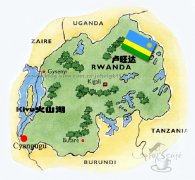
Rwandan coffee is famous for its washed Arabica beans.
Rwandan coffee is absolutely high quality in the form of washed Arabica beans. As far as Africa is concerned, its coffee industry stands out because the country rises and falls by producing the best possible beans. The taste of Rwandan coffee is described as a grassy aroma with tropical climate characteristics. The country's fertile soil and climate help plants grow, and coffee trees seem to be driven
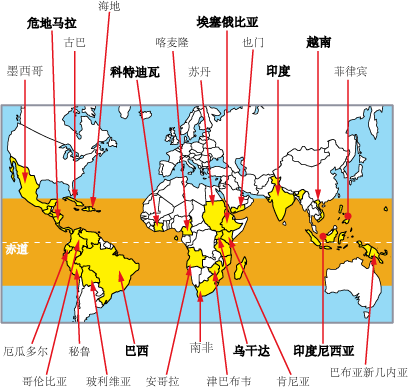
Arabica beans Arabica beans Arabica coffee producing countries Arabica coffee beans Arabica coffee
Arabian coffee beans of small quantity, high quality and soft taste in the Democratic Republic of Sao Tome and Principe. The Democratic Republic of Sao Tome and Principe (Sao Tom and Principe), a volcanic archipelago, is the second smallest independent country in Africa and was once a Portuguese colony, which did not win independence until 1975. The equator crosses the archipelago, where the climate is hot and humid, the land is fertile and irrigated
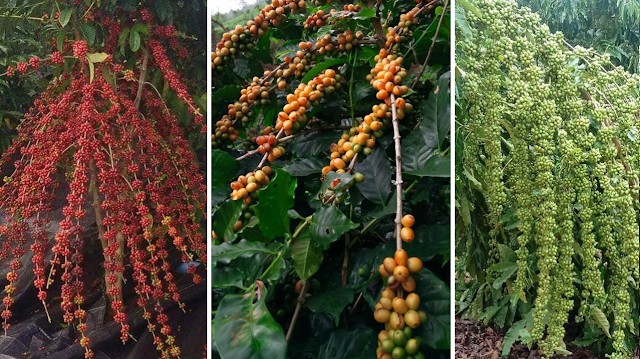
The wind in the coffee market has changed! 60% of Arabica's market share was lost, and Robusta exceeded 40%!
Professional coffee knowledge exchange more coffee bean information Please follow the coffee workshop (Wechat official account cafe_style) in recent years, the industry despises Robsta rather than Arabica. Arabica is the only coffee bean with good flavor. However, Arabica, which is engaged in hard work, has lost its market share of 70%, or even dropped below 60%. According to the United States Department of Agriculture on June 12th